For many cideries, October did not need National Cider Month to become an important part of the calendar. The harvest is underway. Apples are everywhere. Consumers are already looking for fall experiences. And, in many markets, cider is naturally part of the seasonal conversation.
What National Cider Month has provided is something those businesses did not necessarily have before: a common national voice for the cidery industry around a period that was already important to the cider business.
For many cideries, that creates an opportunity to turn existing harvest activity into a more deliberate marketing platform without necessarily having to invent an entirely new event.
At Finnriver Farm & Cidery, Operations Director Andrew Byers said the business began its annual Apple Day celebration around 2015 or 2016 because October simply made sense.
“It’s October, it’s harvest season, it is the time of apples,” Byers said.
The event has grown into a harvest celebration with fresh-pressed juice, music, a pumpkin patch, orchard activities and both hard and mulled cider. But the larger business opportunity, Byers said, is connecting cider to the agricultural season that consumers are already recognizing.
“We know that people recognize the season. We know that farmers recognize the season, and we would like to focus and bioregionally brand that it’s also apple season,” he said in a recent Cider Business Podcast. “Yes, it’s a national campaign, but cider in and of itself is bioregionally specific.”
That makes the harvest itself an experience.
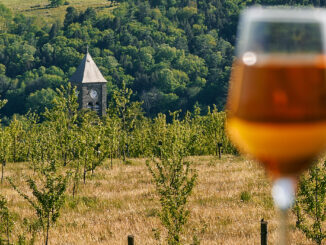
Across the country, cideries are using orchard visits, pressing demonstrations, tours, fresh juice, U-pick activities and harvest celebrations to show consumers that cider starts with agriculture. Watson Wheeler Cider, for example, is using October events that include a public pressing demonstration and a release party for a foraged cider, while Queen Orchard Farm & Cidery is opening its working orchard to visitors with the goal of making the farm itself part of the cider experience.
Queen Orchard General Manager Toney Chay sees that connection as important to growing the overall category.
“As much as we can do to advertise cider and the beverage to make it have a bigger pie inside of the beverage market is like the best thing that we can do,” Chay said.
That points to a second strategy: October does not have to be one event.
City Orchard in Houston has turned the entire month into Harvest Days, using live music, a seasonal Harvest Spice cider, cider donuts made with a local bakery and apples shipped from a New York farm to recreate some of the culture of an apple harvest in a climate where October can still be hot.
“Cider is still an unknown beverage in many parts of the country,” co-founder Patrick Kwiatkowski said. “Anything that brings people in is an educational opportunity for us.”
The month-long approach gives City Orchard multiple opportunities to bring consumers through the door rather than relying on a single weekend. Other cideries are using recurring harvest weekends, monthly tasting programs, trivia nights, workshops and multiple fall experiences under one seasonal identity.
The strategy also gives consumers a reason to come back with something new to drink.
Seasonal products remain one of the simplest ways to create urgency around October. Hermit Woods Winery & Eatery uses its October Cider Tasting Weekend to showcase its full cider lineup while releasing its annual Mulled Cider. Other producers are bringing back pumpkin ciders, introducing new fall brands, releasing varietal ciders or using collaborations to create limited products around the season.
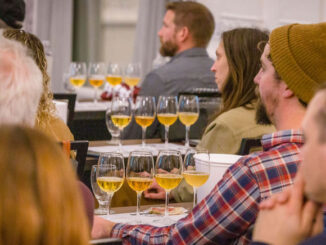
At Seminary Hill Orchard & Cidery, the National Cider Month offering is a special flight of single-varietal ciders designed to emphasize the characteristics of the apples themselves. Co-founder Doug Doetsch said the flight also demonstrates an important reality of an agricultural business: It may not be possible to repeat the exact same program every year because the orchard determines which varieties perform well. That variability can become part of the story rather than a problem to overcome.
Seminary Hill is also taking a more deliberate approach to selling the experience. Along with its website, social media and local media outreach, the cidery trains its restaurant and tasting-room staff on the National Cider Month offerings so employees can explain and promote them directly to guests.
A fourth opportunity is using cider as a reason to reach audiences that may not otherwise interact with a cidery.
The examples range from cider-and-cheese pairings and collaborations with bakeries to festivals featuring multiple cideries, local beer, food vendors, musicians and other producers. Tieton Cider Works is pairing a Washington State University collaboration with appearances at events, while 2 Towns Ciderhouse has built its annual Harvest Party into a major event that combines dozens of ciders with food trucks, cidermaker talks, factory tours and live music. The common thread is that cider becomes the reason for a broader experience, rather than the only product being marketed.
That may be the most useful way for other cideries to think about National Cider Month. It does not necessarily require a new event, a new program or an entirely new marketing calendar. For businesses already deep into harvest, it can provide a name and a national narrative for things they are already doing.
At Finnriver, October is already the company’s highest sales window and busiest period in the cider house, with orchard, pressing, fermentation and sales teams all working simultaneously. Byers said the company also deliberately holds certain varietals for October releases rather than selling everything earlier, using the season as another opportunity to create interest.
At the same time, cideries such as Seminary Hill are careful not to make October the only time consumers should think about cider. Co-founder Susan Manning emphasized that her business promotes cider year-round, with weekly orchard tours and tastings, while its restaurant, hotel, weddings and other events provide additional business throughout the calendar.
Hermit Woods is taking a similar approach to turning seasonal discovery into a longer relationship. After seeing growing interest in its cider offerings, the cidery launched a cider club that provides special releases and year-round benefits, specifically as a way to keep customers connected after they discover the business during the fall.
That may ultimately be the larger opportunity for National Cider Month.
October already gives cider a natural opening. The national campaign, which officially launched in 2022 with Schilling Cider and now has its own website and calendar, gives the industry a chance to speak about it together. The business challenge is turning that seasonal attention into education, trial, repeat visits and year-round cider consumption.
The month does not have to create the opportunity. It can simply help your cidery make more of the one that was already there.