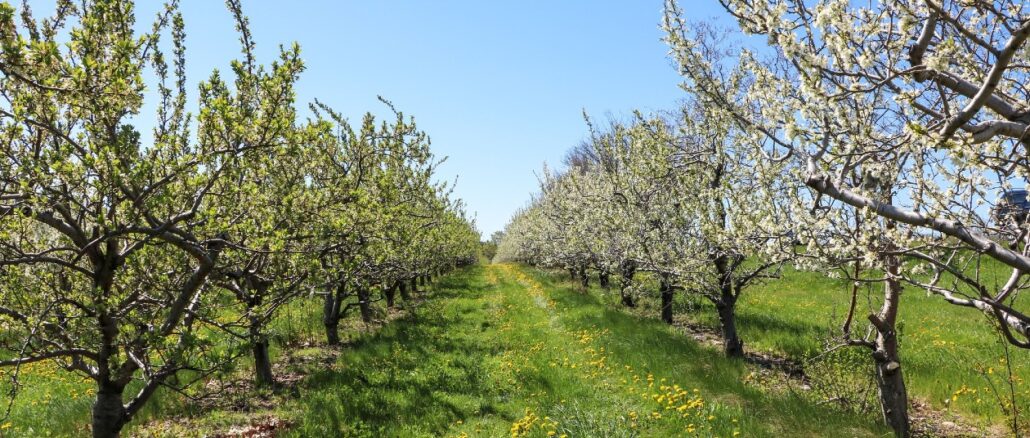
When Oregon Heritage Farms, one of the largest cider apple orchards in the country, shut down in 2024, it did so for financial reasons rather than weather or crop disease.
Small cideries that rely on traditional bittersweet and bittersharp apples are operating within tight margins, according to Emily Ritchie, executive director of Northwest Cider. On average, cideries pay 64 cents per pound for traditional cider fruit. By comparison, she indicated that apples grown for the fresh market can retail for about $3 per pound.
“Small cideries growing traditional bittersweet and bittersharp apples struggle to get the price point they really need for their cider, to make their orchard pencil out,” Ritchie told Cider Business. As she noted, Heritage Farms recently shut down because it “couldn’t charge enough money for a bin of apples to cover the cost of growing the apples.”
While orchard economics remain challenging, Ritchie said the association’s members are currently more focused on alcohol policy issues at the state level.
“Our members really aren’t talking about needing policies or regulations for orchards right now as we are seeing bigger alcohol headwinds,” she said.
In Oregon, Ritchie shared that a legislator has proposed increasing taxes on beer, wine and cider producers by as much as 3,000%. She said Northwest Cider and industry partners have helped defeat five tax bills in the past five years in that state.
READ MORE: Practical Ways These Cideries Are Using Their Orchard Stories to Drive Demand
Lawmakers who support higher alcohol taxes in various states have generally cited public health concerns, efforts to reduce excessive consumption and the need for additional state revenue.
Ritchie said proposals of that scale raise concerns among small producers.
In Washington, she said, an impending retail change could limit where alcohol can be displayed in stores.
“We’re also seeing an impending retail change in the state of Washington that will limit where alcohol can be displayed in stores,” Ritchie said.
According to Ritchie, these types of proposals are currently top of mind for cider producers. She said there are few organizations engaged in orchard preservation work at the policy level, and that legislative attention has centered more on alcohol regulation.
“Top of mind issues with regard to local and state legislatures are the headwinds,” she said.
Ritchie also pointed to the growing influence of neo-prohibitionist organizations. She cited Movendi as an example, noting that the group was involved in the passage of strict alcohol consumption recommendations in Canada.
“The neo-prohibitionist organization Movendi is growing and was part of the passage of strict alcohol consumption recommendations in Canada,” she said.
For Northwest Cider, fruit pricing pressures and proposed regulatory changes have shaped the association’s current advocacy efforts. Ritchie said that while orchard economics remain a concern, alcohol policy proposals represent the more immediate focus for its members.